Why Your Yard Is Always Wet (And How to Actually Fix It)
Need this done? See our Drainage Solutions services →
If you've got a yard that stays wet for days after rain — or sometimes just seems damp all the time — you're not imagining it, and it's not going to fix itself. Here's what's actually going on, and what you can realistically do about it.
Cause 1: Poor Yard Grading
The most common reason yards stay wet is simple: the ground isn't sloped correctly. Ideally, your yard should slope away from your house at roughly 2% grade (about 1 inch of drop per 4 feet of run). When the grade is flat or — worse — slopes toward the house, water pools instead of flowing away.
This is especially common in older neighborhoods where the original grade has settled over the years, or in newer construction where grading was done quickly and not properly checked.
Cause 2: NC's Clay Soil
The Piedmont NC region sits on some of the densest clay soil in the Southeast. Clay holds water like a sponge and drains slowly — often less than half an inch per hour versus 1–3 inches for sandy or loamy soil. When you get 2 inches of rain in an afternoon (not unusual in NC), that water has nowhere to go fast.
Clay soil also compacts easily under foot traffic and lawn equipment, making the drainage problem worse over time. If you've got clay, you need a drainage solution designed for clay — not a generic fix that assumes normal soil.
Cause 3: Missing or Undersized Drainage Infrastructure
Some yards simply have no way to move water off the property. No French drain, no catch basins, downspouts dumping at the foundation. When it rains heavy, the yard temporarily becomes a shallow pond because there's no outlet for the water.
Cause 4: High Water Table
In low-lying areas and near streams or ponds, the water table can be close enough to the surface that even light rain saturates the soil quickly. This is less common in typical residential neighborhoods but more common on rural properties or low spots in subdivisions near natural drainage corridors.
Not Sure Which One You Have?
We come out, look at your property, and tell you exactly what's going on — for free.
📞 Call (336) 967-4194Or Get a Free Estimate Online →
How to Actually Fix It
The fix depends entirely on the cause. Here's what we typically recommend:
- Grading problem: Regrade the yard to restore proper slope. Sometimes a small amount of fill dirt and a few hours of work solves the whole thing.
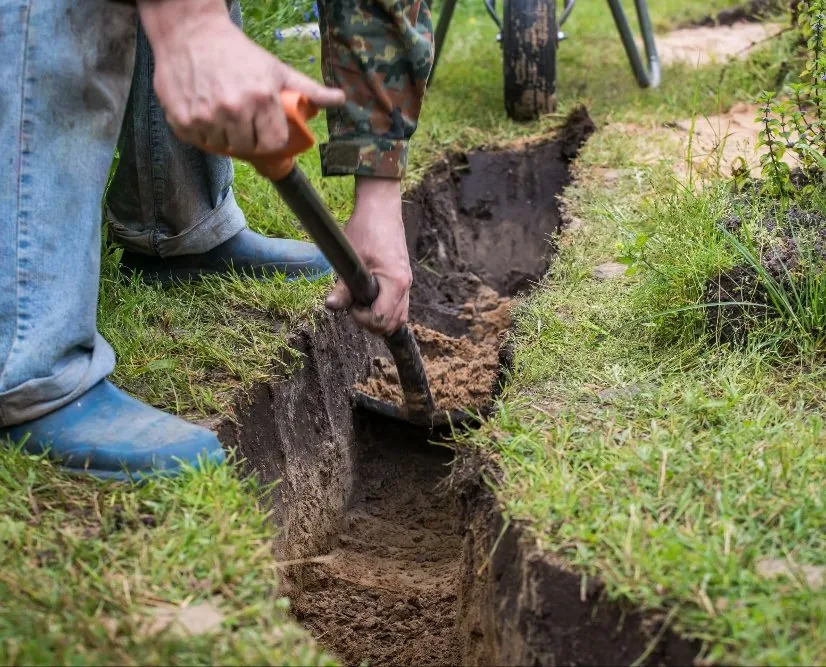
- Clay soil: Subsurface French drain system that intercepts water before it saturates the surface. Sometimes combined with organic matter amendment for planting areas.
- No drainage infrastructure: Install catch basins, French drains, and downspout extensions to create multiple paths for water to exit the property.
- High water table: Raised planting beds, strategic native plantings like bald cypress that love wet conditions, and surface-to-outlet drainage to redirect water quickly.
What Doesn't Work
A few things people try that rarely fix the underlying problem:
- Adding topsoil without fixing the grade — the water just finds a new low spot
- Planting grass seed in a wet area — grass roots drown, bare patches come back
- Raking and aerating — helpful for mild compaction, not for real drainage issues
The bottom line: if your yard has been wet for more than one season, it needs real drainage work — not cosmetic fixes. The good news is that most residential drainage problems are straightforward when you diagnose them correctly.
A Simple Way to Narrow Down Your Cause
Before calling anyone, a couple of observations can point you toward the likely cause. Stand at your foundation after a dry stretch and look at the slope — if it's visibly flat or tilts back toward the house, grading is probably at least part of the problem. Dig a small hole a few inches down in the wet area during a dry period: if the soil below the surface is still noticeably damp or forms a smooth, sticky ribbon when rolled between your fingers, that's clay holding water, not just surface runoff. If your yard is low-lying, near a creek, or in a subdivision built on former wetland, a high water table becomes more likely regardless of grade or soil type. And if you can't identify any obvious drain, pipe, or outlet anywhere on the property, missing infrastructure is probably compounding whatever else is going on.
Rough Cost by Cause
Grading fixes tend to be the least expensive when caught early — often a few hundred to a couple thousand dollars for a straightforward regrade. Clay soil solutions using French drains typically run $1,500–$5,000 depending on the extent of the saturated area. Adding missing drainage infrastructure from scratch — catch basins, French drains, and downspout extensions together — often falls in a similar $1,500–$8,000 range depending on property size and how many separate problem areas need addressing. High water table situations tend to need the most involved, and sometimes most expensive, solutions since they often combine several of the above with strategic plantings. None of these numbers substitute for an actual on-site assessment, but they give you a realistic sense of what you're likely looking at before that first call.
Need This Done? We Make It Easy.
One call, free estimate, fast results. That's the whole deal.
📞 Call (336) 967-4194Or Get a Free Estimate Online →