Retention Pond vs Drainage System: What's the Difference?
Need this done? See our Retention Pond Design services →
Both retention ponds and drainage systems manage stormwater. Beyond that, they work completely differently — they're not two versions of the same solution. Getting them confused leads to costly mistakes. Here's the clear breakdown.
| Factor | Retention Pond | Drainage System |
|---|---|---|
| How it works | Stores water, releases slowly | Moves water away quickly |
| Best scale | 1+ acres, commercial, subdivision | Residential, up to a few acres |
| Typical cost | $10,000–$100,000+ | $1,500–$15,000 |
| Maintenance | Ongoing — annual inspection, sediment removal | Minimal — occasional cleaning |
| Regulatory | Often required for large developments | Usually no permit needed |
| Wildlife benefit | High — habitat, water source | Minimal |
| Land required | Significant — 0.1–1+ acres | Minimal — trench, small basin |
How a Retention Pond Works
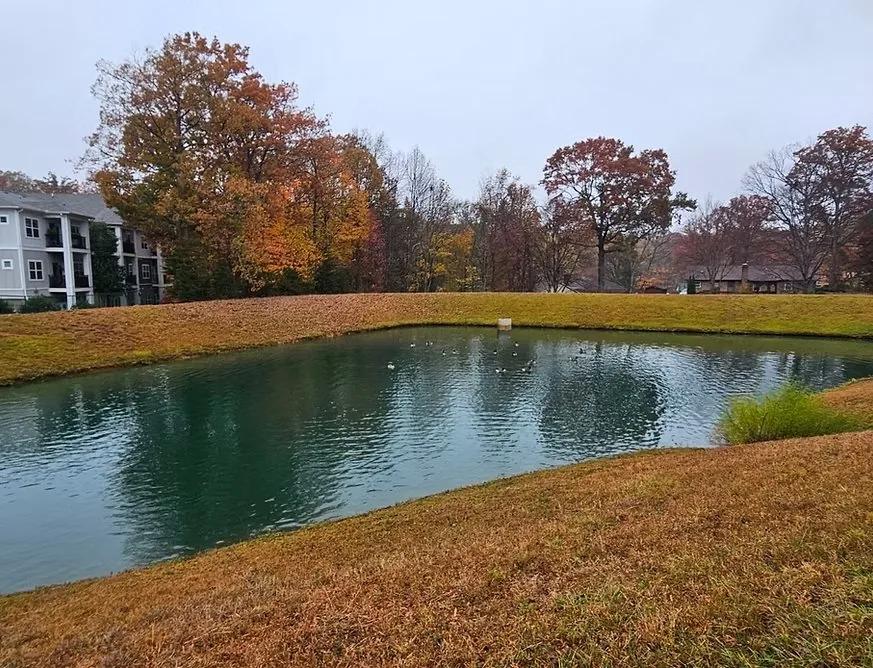
A retention pond is designed to hold water. When rain falls on a developed area — rooftops, parking lots, roads — the runoff flows into the pond through inlets. The pond holds the water and releases it slowly through a controlled outlet structure, preventing the downstream flooding that would occur if all that runoff hit the stream at once.
Retention ponds are most valuable at scale: subdivisions, commercial properties, industrial sites where the impervious surface coverage is high and the runoff volumes are large. They're sized based on the watershed area they serve.
How a Drainage System Works
A residential drainage system — French drains, catch basins, piped outlets — does the opposite: it moves water away from your property as quickly as possible. Instead of storing water, it creates paths for water to exit to a storm system, a daylight outlet, or a drainage easement.
Drainage systems are the right tool for: residential wet yards, foundation drainage, low spots on 1-5 acre properties, and anywhere the goal is to get water off-site efficiently.
The Overlap: When a Small Pond Helps
There's a middle ground on larger rural properties — a small designed pond that serves double duty as both a water feature and a stormwater collection point. On properties of 5+ acres with significant runoff, a properly designed pond with a controlled outlet can be an effective and beautiful solution. It's not a retention pond in the regulatory sense, but it functions similarly.
Why People Mix These Up
The confusion usually comes from both systems being lumped under the general umbrella of "stormwater management" in casual conversation, plus the fact that both can involve underground pipe and an outlet structure. But the core function is opposite: a pond is designed to hold water and release it slowly over time, while a drainage system is designed to move water away as fast as possible. Asking a drainage contractor to quote a "retention pond" — or vice versa — usually results in a confusing conversation until the actual property and goal get clarified.
Cost Reality Check
The cost gap in the table above is significant and worth taking seriously before assuming you need a pond. A residential drainage system solving a wet-yard or foundation-moisture problem typically runs $1,500–$15,000 depending on scope. A properly engineered retention pond — even a modest one — starts around $10,000 and scales up quickly with size and regulatory requirements. If your actual problem is "my yard stays wet" rather than "I'm developing land that requires stormwater management," a pond is almost certainly the wrong — and dramatically more expensive — tool for the job.
How to Know Which Conversation You're Having
A simple gut check: are you trying to solve a wet yard, foundation moisture, or standing water problem on an existing residential property? That's a drainage system conversation. Are you developing land, adding significant impervious surface, or building in a jurisdiction with stormwater management requirements? That's a retention pond conversation — and likely not optional once you're past a certain scale of development. Knowing which category you're in before you start calling contractors saves everyone time.
Let's Figure Out What Makes Sense for Your Property
Free on-site evaluation. We'll tell you exactly what solution fits your situation.
📞 Call (336) 967-4194Or Get a Free Estimate Online →