French Drain vs. Surface Drain: Which Do You Need?
Need this done? See our Drainage Solutions services →
People use "drainage system" as a catch-all, but French drains and surface drains are completely different tools that solve completely different problems. Getting the right one — or knowing when you need both — is the difference between a permanent fix and a wasted investment.
| Feature | French Drain | Surface Drain |
|---|---|---|
| Solves | Subsurface saturation | Surface pooling |
| How it works | Perforated pipe in gravel trench collects groundwater | Inlet grate collects surface runoff into pipe |
| Best for | Soggy lawns, wet soil, foundation seepage | Low spots, patios, driveways, hardscape |
| Visibility | Underground, invisible | Grate visible at surface |
| Cost | $1,500–$5,000+ | $800–$2,500 |
| NC clay soil | Highly effective | Works for surface only |
What a French Drain Actually Does
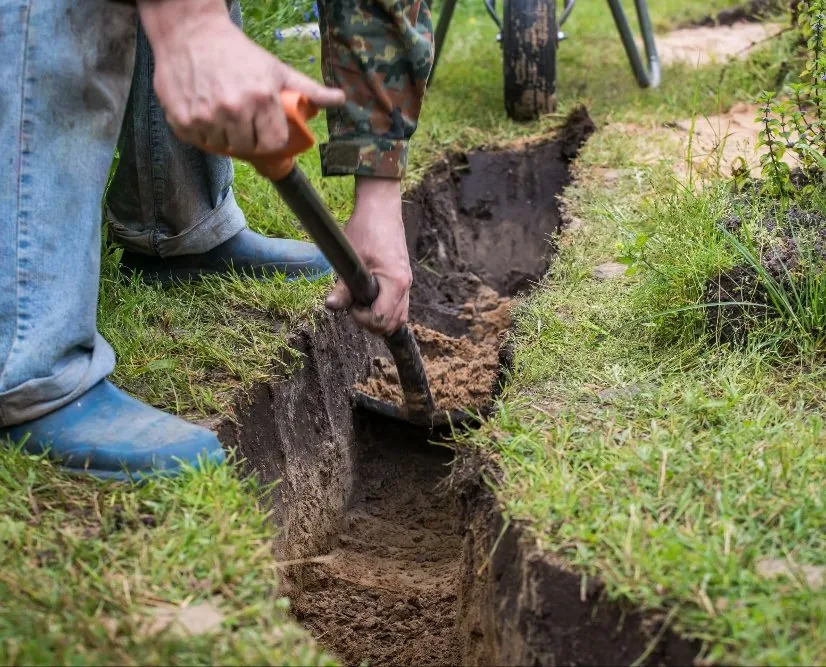
A French drain is a subsurface system. A trench is dug, filled with gravel, and a perforated pipe runs through the center. Groundwater seeps into the gravel, enters the pipe through the perforations, and flows to an outlet point — a daylight outlet, a dry well, or a storm drain connection.
French drains are ideal for: soggy lawns where the soil stays saturated, areas where the water table is high, foundation perimeters where groundwater pressure is a concern, and slopes where subsurface water is migrating downhill.
What a Surface Drain Does
A surface drain (also called a catch basin or yard drain) sits at ground level with a grate that collects surface water. The water flows through the grate into an underground pipe and out to an outlet. It solves pooling in specific low spots — patios, driveways, lawns with a defined low point.
Surface drains are ideal for: concrete or hardscape areas where you can't regrade, defined low spots that collect runoff from multiple directions, and areas right next to structures where you can't install a French drain without excavating near the foundation.
When You Need Both
Here's where it gets nuanced: many NC yards have both subsurface saturation (clay holding water below grade) AND surface pooling (a low spot in the yard). In those cases, a French drain alone won't eliminate the visible puddle fast enough, and a surface drain alone won't fix the soggy soil underneath.
The right solution combines both: surface drains at low points feeding into a system that also includes French drain laterals to pull subsurface water out of the saturated zone. It sounds complex but it's a very standard installation for us.
Installation Timeline and Disruption
A standalone surface drain installation is usually the less disruptive of the two — trenching is typically shallow and limited to the path between the low spot and the outlet, often completed in a day for a straightforward residential job. A French drain involves a longer, sometimes deeper trench run to properly intercept subsurface water, which can mean 1–2 days of work and more visible yard disturbance during installation. Both are fully restored — regraded, seeded or sodded — once the pipe is in and backfilled, but it's worth knowing which one you're signing up for before work starts.
A Quick Way to Tell Them Apart in Your Own Yard
If you can point to one specific spot where water always collects — same location, every time, usually near a hardscape edge or a natural low point — that's surface drain territory. If instead a broader area of lawn stays spongy and never fully dries out, without one obvious low point, that's a subsurface issue a French drain is built to solve. A lot of Triad yards on clay soil show both patterns in different areas, which is exactly the case where a combined system earns its cost.
Not Sure Which One You Need?
We come out, look at your yard, and tell you exactly what will fix it — no guessing, no upselling.
📞 Call (336) 967-4194Or Get a Free Estimate Online →
How We Decide
When we evaluate a drainage problem, we're asking: where is the water coming from (surface runoff vs. groundwater), where is it going (or not going), and what's the fastest path to a permanent fix? The answer to those questions determines the system design — not a one-size-fits-all recommendation.
Need This Done? We Make It Easy.
One call, free estimate, fast results. That's the whole deal.
📞 Call (336) 967-4194Or Get a Free Estimate Online →