Retention Ponds Don't Have to Be Ugly — Turn Them Into Natural Ecosystems
Need this done? See our Retention Pond Design services →
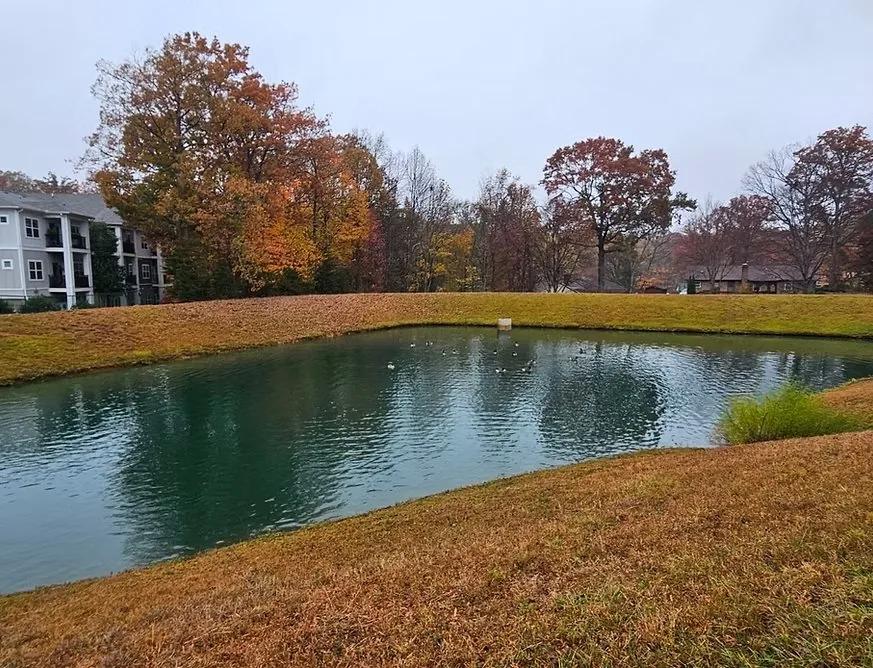
Drive through any NC subdivision and you'll see the same retention pond: a triangular basin of bare grass sloping to a concrete outlet structure, maybe a "no swimming" sign. It looks like what it is — a regulatory requirement, designed to code minimum and nothing more.
Done differently, that same retention pond can be one of the most beautiful and ecologically valuable features on your property. Here's how.
What Makes a Pond an Ecosystem
An ecological pond differs from a managed basin in one fundamental way: it supports living communities that maintain themselves. Native plants establish root systems that stabilize banks without erosion fabric. Insects colonize the margins. Birds follow the insects. Frogs and turtles move in. The whole system becomes largely self-regulating — requiring less intervention, not more.
The Native Plant Design
The transformation starts at the water's edge. Instead of mowed turf to the waterline, plant a gradient of native species:
- Upland edge (above water line): Native shrubs like buttonbush, Virginia willow, and swamp rose. These provide bird habitat, stabilize the upper bank, and create visual screening.
- Wet edge (at waterline): Blue flag iris, cardinal flower, native sedges and rushes. These species tolerate periodic inundation and bloom spectacularly in late spring.
- Shallow water zone: Pickerelweed, arrow arum, native water lily. These oxygenate the water, provide habitat for invertebrates, and create the visual anchor of the pond.
- Adjacent uplands: Bald cypress (a magnificent tree in wet conditions), native oaks, and understory trees that provide canopy, root stabilization, and seed for birds.
The Wildlife That Follows
A properly planted retention pond in NC will host: great blue herons (year-round), wood ducks (nesting if boxes are installed), kingfishers, dozens of songbird species using the shrub margin, native bees and butterflies at flowering plants, chorus frogs and cricket frogs in abundance, and painted turtles basking on emergent logs.
This isn't wishful thinking — it's what consistently happens when you provide the habitat. NC's native wildlife is looking for exactly what a well-planted pond provides.
Does It Still Function as a Retention Pond?
Yes — often better. Native plant root systems absorb and filter water more effectively than turf grass. Native emergent plants uptake nutrients that would otherwise contribute to algae growth. The overall water quality in a naturalized pond is typically better than a mowed-turf equivalent. And it continues to meet any regulatory stormwater requirements.
Maintenance: Actually Less Work Long-Term
A mowed-turf pond bank needs regular mowing — often weekly during the growing season — right up to a waterline that's awkward and sometimes hazardous to mow. A naturalized pond margin needs an annual or biannual check-in: light pruning of shrubs, removing any invasive species that try to establish, and occasional thinning of aggressive spreaders like cattails if they threaten to take over open water. Once established, native plantings largely maintain themselves — the labor shifts from constant mowing to occasional, seasonal management, which is both less frequent and less costly over a multi-year period.
You Don't Have to Do It All at Once
Converting an existing bare-turf retention pond doesn't require ripping everything out in a single project. A phased approach — starting with the upland edge shrubs and working toward the waterline over 2–3 planting seasons — spreads the cost out and lets you see results building before committing to the full design. This is often the more practical path for an existing HOA-maintained pond where budget gets approved incrementally rather than all at once.
Turn Your Pond Into Something Special
We design and plant ecological pond margins throughout the Triad NC. Free consultation.
📞 Call (336) 967-4194Or Get a Free Estimate Online →