Land Clearing Before Building a House: What Most People Miss
Need this done? See our Land Clearing NC services →
If you've bought raw land in the Triad and you're preparing to build, land clearing is your first physical step on the path to construction. Most buyers know they need it. Most don't know all the ways it can go right or wrong. Here's what actually matters.
What "Cleared for Construction" Actually Means
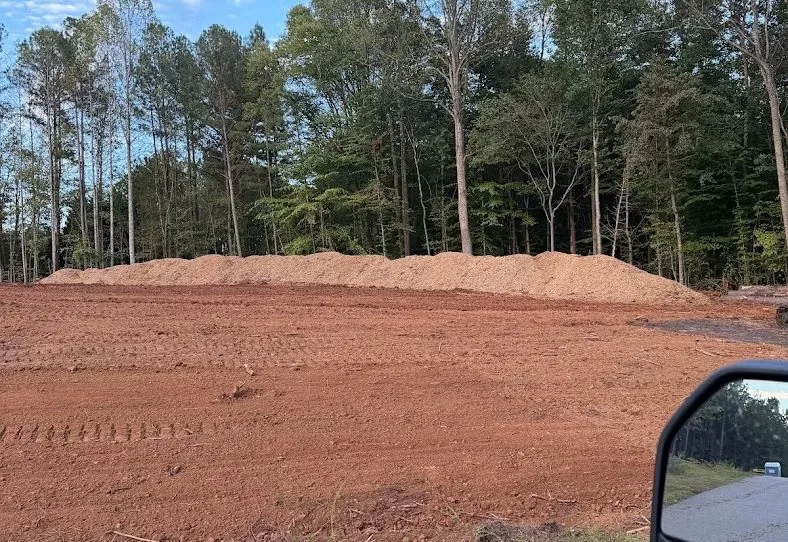
There's a difference between "cleared" and "cleared for construction." Mowing down brush and removing visible trees is clearing. Clearing for construction means: removing all trees, stumps, and root systems from the building footprint; clearing and grubbing the area where the foundation will sit; establishing the access route for construction equipment; and identifying and protecting any trees outside the build zone that you want to keep.
Stumps and root systems left in place under a foundation create real problems — as they decompose, they create voids that cause settling, cracking, and moisture infiltration. Don't skip the grubbing.
The Drainage Assessment Nobody Does
Here's what most builders and buyers miss: before you clear and grade, you need to understand how water currently moves across your raw land. The natural topography is your starting point. If you bulldoze it without a drainage plan, you're potentially creating drainage problems that will haunt the finished property for decades.
Questions to answer before clearing: Where does water naturally flow during rain? Are there seasonal wet areas? How does the building site relate to the natural drainage watershed? What's the soil type and drainage capacity?
We incorporate drainage assessment into every pre-construction clearing project. It's not extra work — it's how you avoid the expensive fixes later.
Forestry Mulching vs. Traditional Clearing for New Construction
For the areas outside your building footprint — where you'll have lawn, landscaping, and outdoor living — forestry mulching is almost always the better choice than traditional clearing. You get cleared land with mulched soil that's protected from erosion during construction, rather than bare dirt that washes away every time it rains.
For the building footprint itself, you need grubbing — full stump and root removal — which is a traditional clearing operation. We handle both as part of a coordinated approach.
Timber Value: Don't Ignore It
If your land has mature hardwood timber — white oak, hickory, walnut — it may have real commercial value before you clear it. A timber consultation before clearing can sometimes generate enough revenue to offset a significant portion of your clearing cost. We can refer you to local timber buyers who can assess the value of what's on your land.
Coordinating With Your Builder's Timeline
Clearing ahead of new construction isn't a standalone task — it needs to line up with your builder's schedule, permitting timeline, and any soil testing (like a perc test for septic) that has to happen on undisturbed or specifically prepared ground. Clear too early and you risk regrowth or erosion setting in before the building phase actually starts. Clear too late and you become the bottleneck holding up your builder's schedule. Sharing your builder's timeline with us upfront lets us sequence the clearing to land right when it's needed — not weeks ahead of schedule sitting exposed, and not scrambled together at the last minute.
What to Ask a Land Clearing Contractor Before Building
- Do you handle both mulching and traditional grubbing? New construction usually needs both — mulching outside the footprint, grubbing within it.
- Will you assess drainage before clearing, not just after? This is the step that gets skipped most often and causes the most expensive regret.
- Can you work around a builder's timeline and inspections? Construction schedules are unforgiving — confirm your clearing contractor understands that.
- What happens to protected trees during grading and construction traffic? Trees marked to stay can still be damaged by heavy equipment traffic if root zones aren't protected during the build phase, not just during clearing.
Planning a Build on Raw Land?
We help you clear right the first time. Free site assessment for all Triad NC properties.
📞 Call (336) 967-4194Or Get a Free Estimate Online →