From Cleared Land to Thriving Landscape: A Step-by-Step Plan
Need this done? See our Land Clearing NC services →
Cleared land is a blank canvas — but it's a canvas that needs to be treated correctly in the right sequence or you'll spend years correcting mistakes. Here's the complete plan, in order.
Phase 1: Assess and Plan (Before Touching the Ground)
Before any work begins, understand your land: How does water move across it naturally? What's the soil type? What are your goals — lawn, garden, natural landscape, or a combination? Where will drainage outlets be? What regulations apply (setbacks, stormwater requirements)?
Skipping this phase is the most expensive mistake you can make. Every hour spent planning saves 3–5 hours of fixing problems later.
Phase 2: Clear Strategically
Clear what needs to go and preserve what should stay. Use forestry mulching for areas that will become lawn or natural landscape — it leaves the soil protected and enriched. Use traditional clearing and grubbing only for the building footprint or areas that require clean bare soil.
Phase 3: Grade to Final Elevations
Establish your final grades before installing any drainage. All slopes should direct water away from structures and toward outlets. The foundation perimeter (if applicable) should have 6 inches of drop over the first 10 feet. Work with the natural topography where possible — it's trying to tell you something about where water wants to go.
Phase 4: Install Drainage Infrastructure
With grade finalized, install any catch basins, French drains, and outlet structures needed to handle water volumes the grade alone can't manage. This is especially important in NC's clay soils where even good grade doesn't drain fast enough during heavy rain events.
Phase 5: Establish Ground Cover Immediately
Bare soil is erosion waiting to happen. The moment grading is complete, stabilize with: seeding (for lawn areas), erosion blankets or straw (for slopes), or mulch (for beds and transition areas). Don't wait. One good rainstorm can undo days of grading work.
Phase 6: Plant Strategically for Long-Term Function
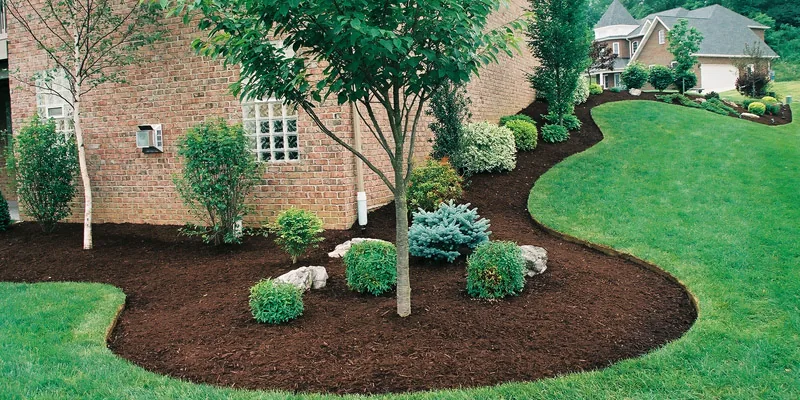
This is where most people underinvest. Native trees planted in year one provide drainage benefits, erosion control, and wildlife habitat for the next 50+ years. Plant bald cypress and river birch in naturally wet areas. Plant native oaks on higher ground. Use native shrubs to stabilize edges and banks.
The goal isn't just "looks nice" — it's building a landscape that manages itself, requires minimal intervention, and gets better with every passing year.
A Realistic Timeline
For a typical residential-scale project, clearing and grading (Phases 1–4) usually wraps in days to a couple of weeks depending on property size and complexity. Ground cover establishment (Phase 5) needs a few weeks to a season to fully take hold, and it's weather-dependent — timing this around a favorable planting window matters. Tree and shrub planting (Phase 6) is often best done in fall for NC's climate, and the "thriving" part of the timeline — canopy filling in, plantings looking established rather than newly-installed — is realistically a 2–3 year process, with the landscape continuing to improve for a decade or more after that. Anyone promising an instantly mature landscape is either overselling or planting mature (expensive) specimen trees rather than cost-effective younger stock.
Budgeting Across the Phases
The biggest planning mistake we see is homeowners budgeting for clearing and grading, then running out of budget before Phases 5 and 6 — leaving bare, unstabilized soil sitting exposed for a season or more. That's the worst outcome financially, since exposed soil erodes, requires rework, and the eventual planting costs the same either way, just later and after avoidable damage. It's better to plan and budget for all six phases from the start, even if planting happens in stages over a year or two, than to stop after clearing and treat the rest as a "someday" project.
We Handle the Whole Plan
Clearing through final landscape. Free estimate and site assessment for Triad NC properties.
📞 Call (336) 967-4194Or Get a Free Estimate Online →